Portfolio

Selected projects with the related articles.

Matrix-free Multigrid Method for Obstacle Problems in Linear Elasticity
Description

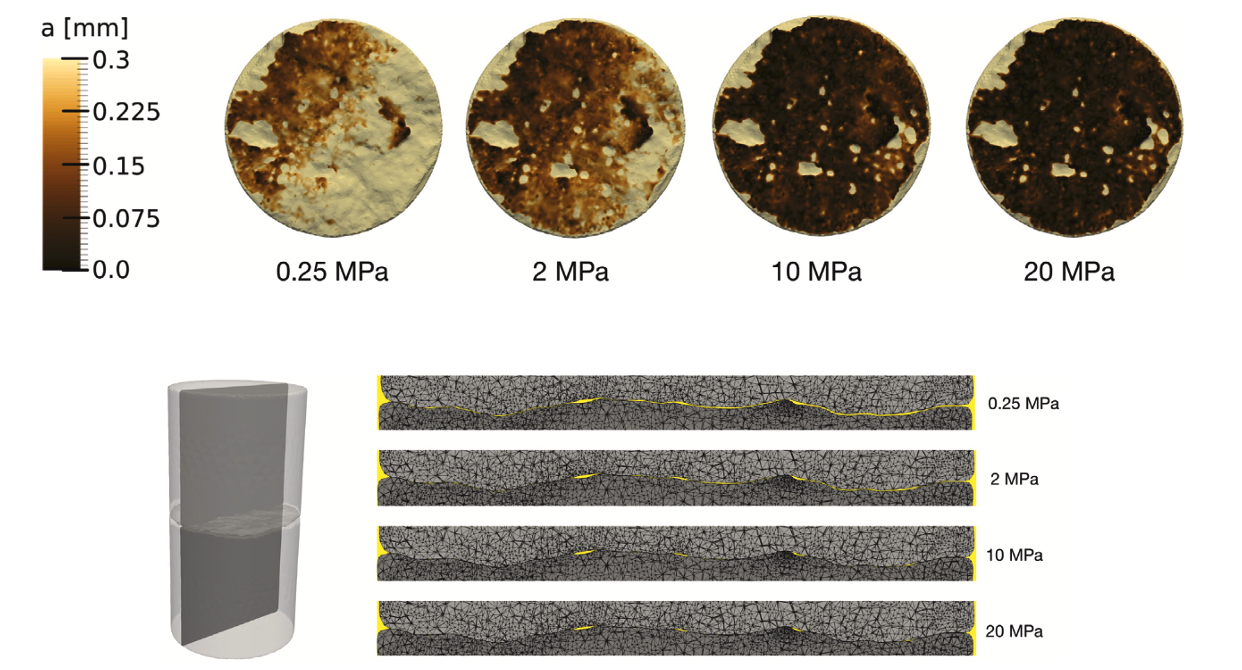
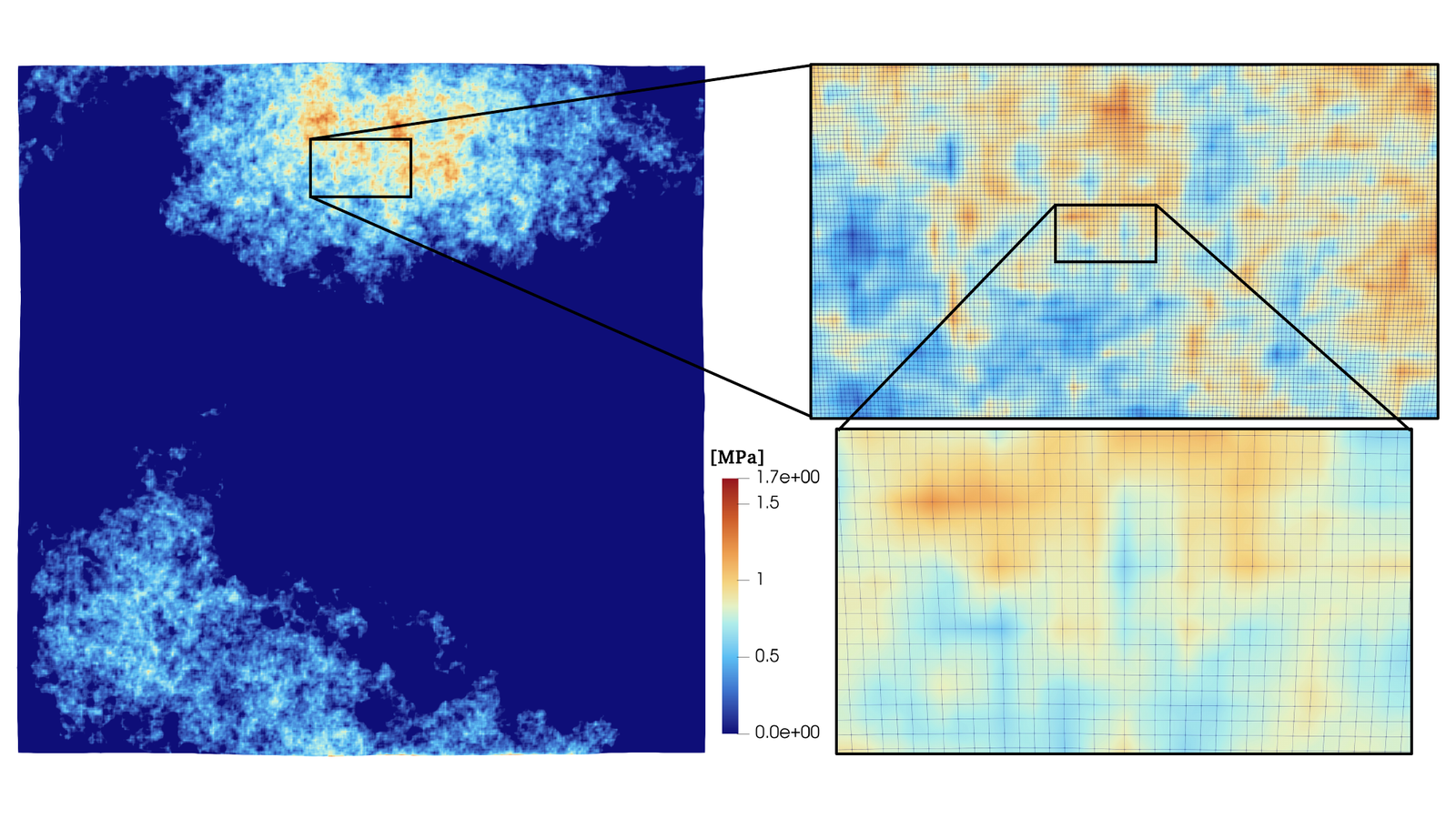
Efficient and robust algorithms are essential for solving large-scale contact problems involving complex obstacles. Monotone multigrid methods provide a solid foundation with optimal computational complexity, while penalty and augmented Lagrangian formulations offer flexibility for handling over-constrained systems and fuzzy contact conditions. The augmented Lagrangian method enforces contact constraints with high accuracy and remains competitive with non-smooth techniques such as the semi-smooth Newton method.

We combine the efficiency of multigrid methods with the adaptability of augmented Lagrangian formulations in the Matrix-free Multigrid Augmented Lagrangian (MaMAL) method for contact problems. MaMAL integrates nonlinear smoothing and constraint coarsening, incorporating penalty terms directly into the multilevel preconditioner within an augmented Lagrangian iteration. Matrix-free operators on semi-structured meshes enable simulations exceeding 600 million degrees of freedom on a single NVIDIA GH200 GPU. Numerical experiments show convergence rates and accuracy comparable to state-of-the-art methods, and the effect of the penalty parameter and of a linear line search.
An Immersed Domain Method for Fluid-Structure Interaction with Contact

Description

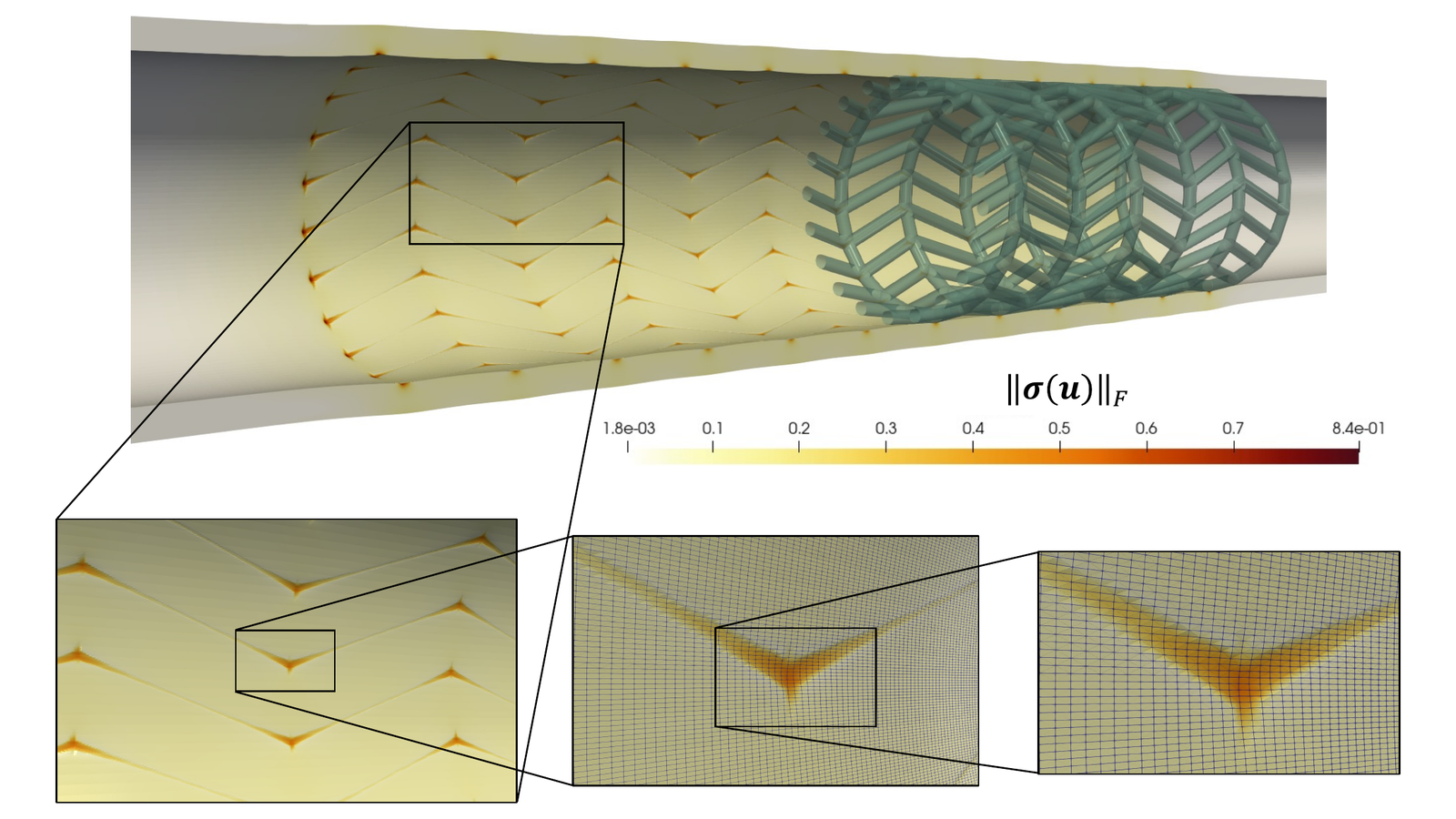
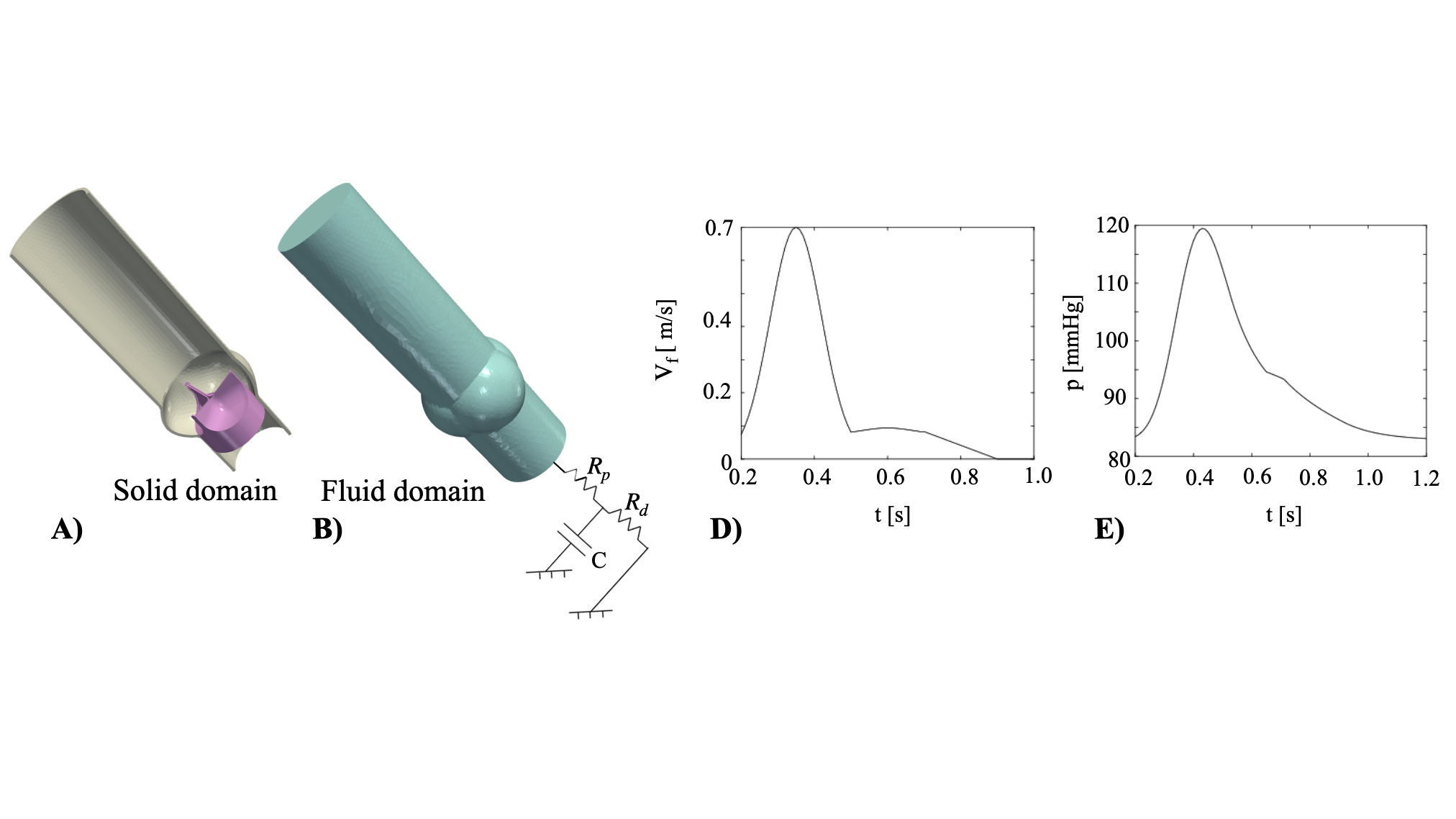
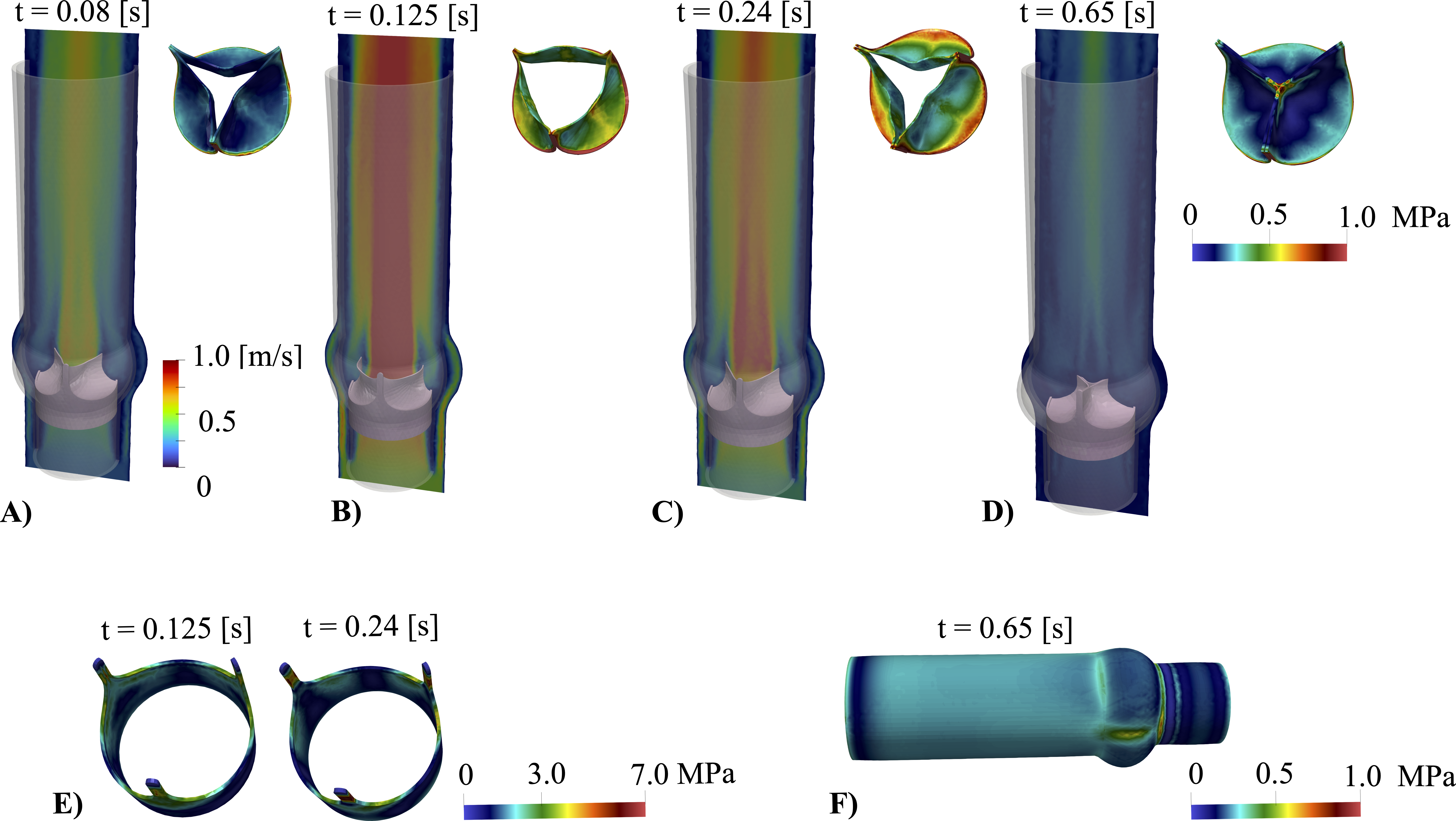
We present an immersed domain approach for the numerical solution of contact problems between multiple elastic structures immersed in a fluid flow. We simulate the full dynamics of a bio-prosthetic heart valve. We model the blood-valve interaction, the blood-aortic wall interaction, and the contact among leaflets during the valve closure. The solid structures are modeled as hyperelastic and anisotropic materials, whereas the fluid is considered Newtonian. The mathematical modeling of such material properties and the contact mechanics give rise to a large-scale nonlinear problem that is both challenging and computationally expensive. We employ a localized version of the L2-projection for handling the fluid-structure volumetric coupling and a variant of the mortar method for coupling the surfaces of the structures in contact. We illustrate one verification test and a fully coupled fluid-structure-contact interaction simulation of a bio-prosthetic heart valve placed in the aortic root.

Data-centric workloads with MPI_Sort

Description

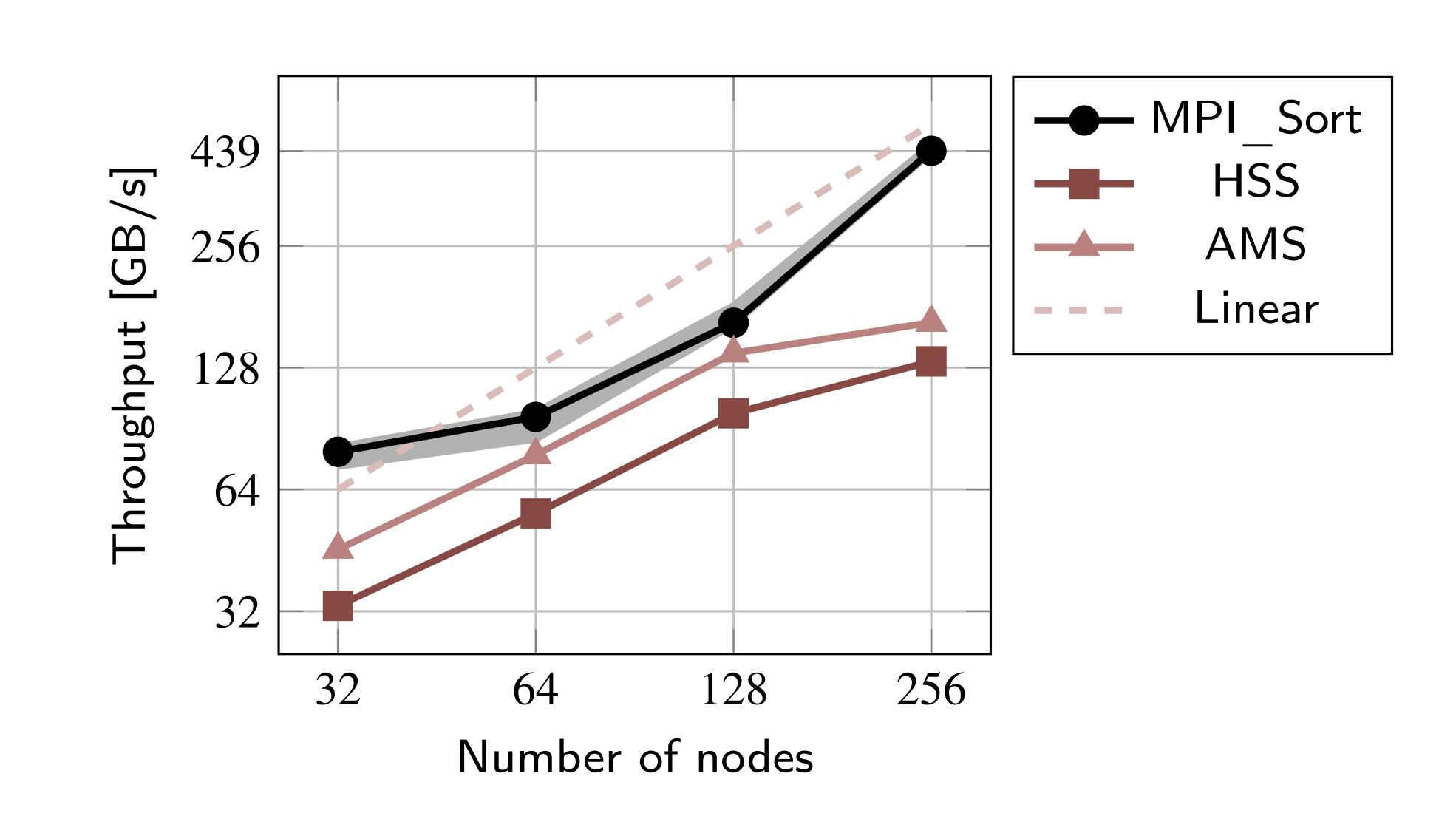
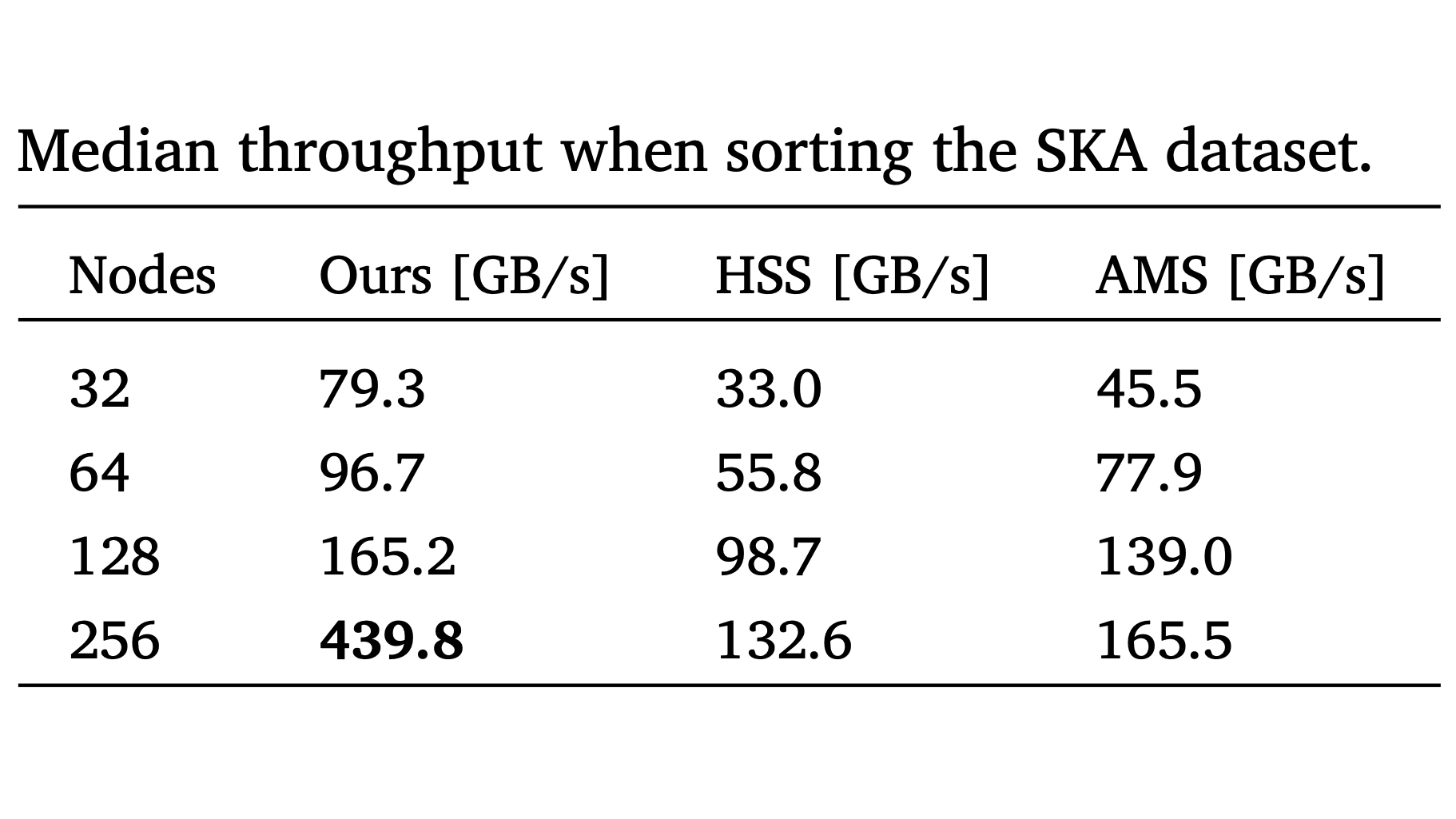
Sorting is a fundamental task in computing and plays a central role in information technology. The advent of rack-scale and warehouse-size data processing shaped the architecture of data analysis platforms towards supercomputing. In turn, established techniques on supercomputers have become relevant to a wider range of application domains. This work is concerned with multi-way mergesort with exact splitting on distributed memory architectures. At its core, our approach leverages a novel and parallel algorithm for multi-way selection problems. Remarkably concise, the algorithm relies on MPI_Allgather and MPI_ReduceScatter_block, two collective communication schemes that find hardware support in most high-end networks. A software implementation of our approach is used to process the Terabyte-size Data Challenge 2 signal, released by the SKA radio telescopes organization. On the supercomputer considered herein, our approach outperforms the state of the art by up to 2.6X using 9,216 cores. Our implementation is released as a compact open source library compliant to the MPI programming model. By supporting the most popular elementary key types, and arbitrary fixed-size value types, the library can be straightforwardly integrated into third-party MPI-based software.

Scalable matrix-free solver for 3D transfer of polarized radiation in stellar atmospheres

Description

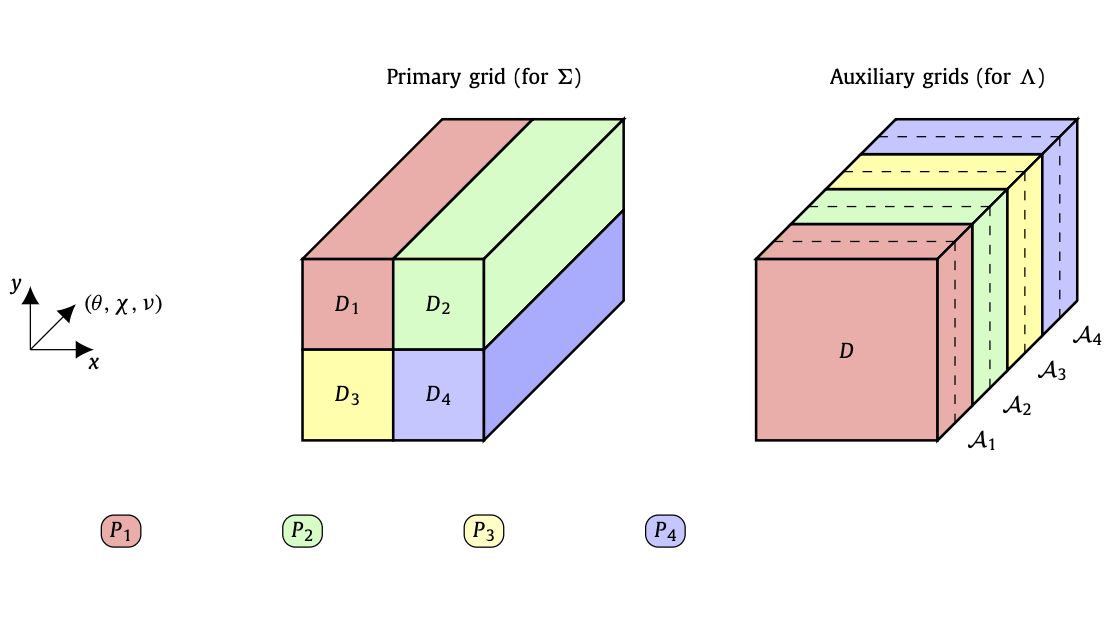
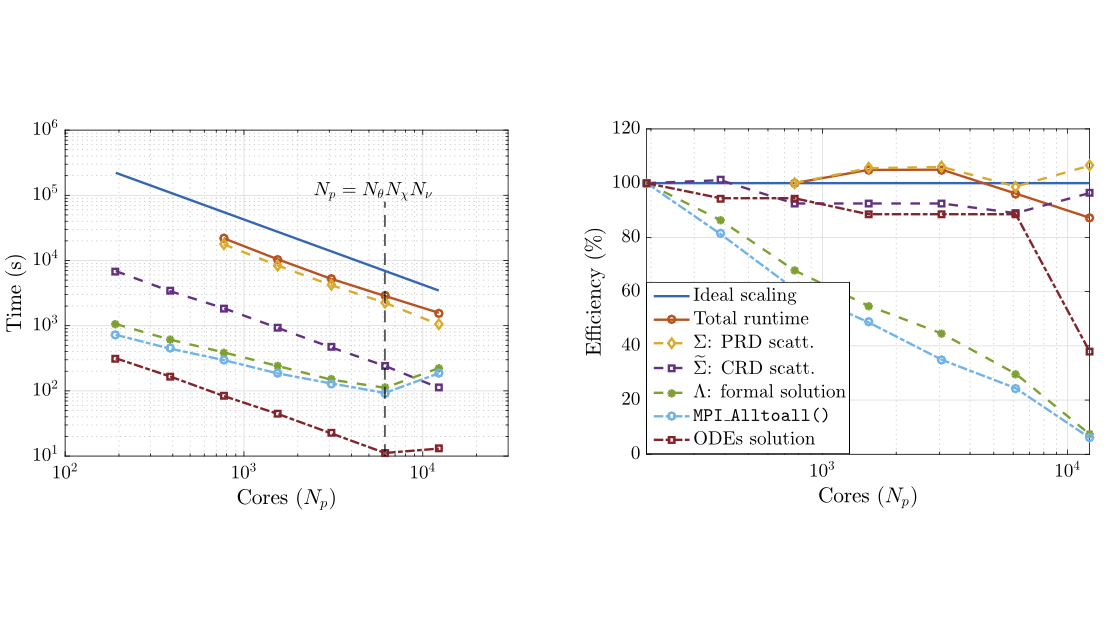
We present an efficient and massively parallel solution strategy for the transfer problem of polarized radiation, for a 3D stationary medium out of local thermodynamic equilibrium. Scattering processes are included accounting for partial frequency redistribution effects. Such a setting is one of the most challenging ones in radiative transfer modeling. The problem is formulated for a two-level atomic model, which allows linearization. The discrete ordinate method alongside an exponential integrator are used for discretization. Efficient solution is obtained with a Krylov method equipped with a tailored physics-based preconditioner. A matrix-free approach results in a lightweight implementation, suited for tackling large problems. Near-optimal strong and weak scalability are obtained with two complementary decompositions of the computational domain. The presented approach made it possible to perform simulations for the Ca i line at 4227Å with more than 109 degrees of freedom in less than half an hour on massively parallel machines, always converging in a few iterations for the proposed tests.

A Parallel Approach to the Variational Transfer of Discrete Fields between Arbitrarily Distributed Unstructured Finite Element Meshes

Description

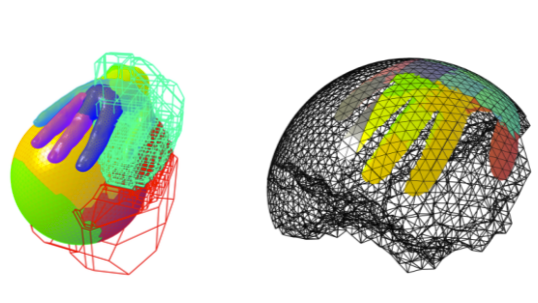
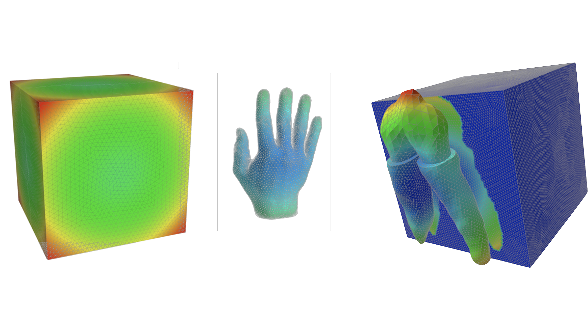
An essential ingredient for the discretization and numerical solution of coupled multi-physics or multi-scale problems are stable and efficient techniques for the transfer of discrete f ields between non-matching volume or surface meshes. Here, we present and investigate a new and completely parallel approach. It allows for the transfer of discrete fields between unstructured volume and surface meshes, which can be arbitrarily distributed among different processors. No a priori information on the relation between the different meshes is required. Our inherently parallel approach is general in the sense that it can deal with both classical interpolation and variational transfer operators, e.g., the L2-projection and the pseudo-L2-projection. It includes a parallel search strategy, output dependent load balancing, and the computation of element intersections, as well as the parallel assembling of the algebraic representation of the respective transfer operator. We describe our algorithmic framework and its implementation in the library MOONoLith. Furthermore, we investigate the efficiency and parallel scalability of our new approach using different examples in 3D. This includes the computation of a volume transfer operator between 2 meshes with 2 billion elements in total and the computation of a surface transfer operator between 14 different meshes with 59 billion elements in total. The experiments have been performed with up to 12288 cores.

Research and development for computational application in geophysics

Description

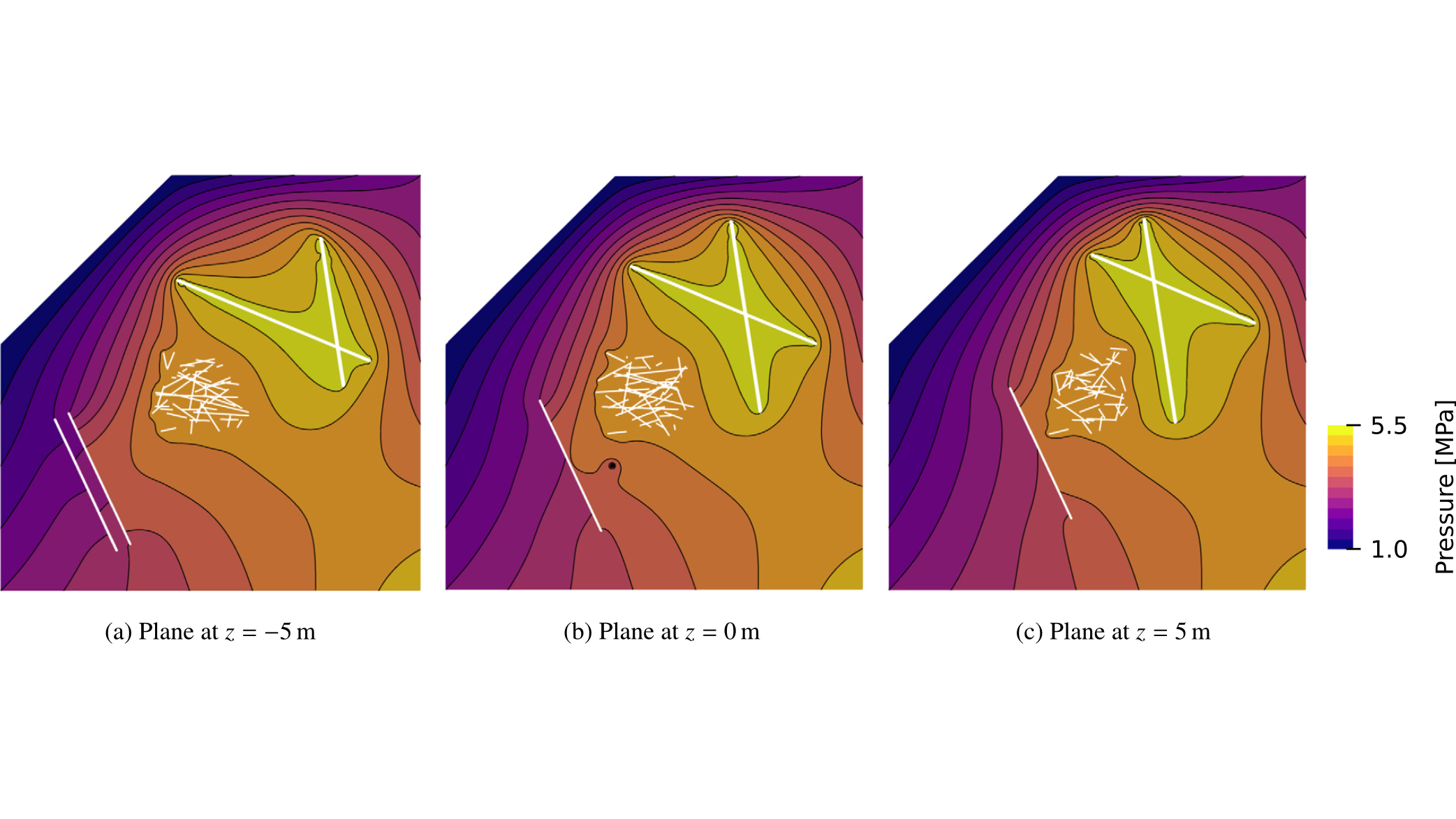
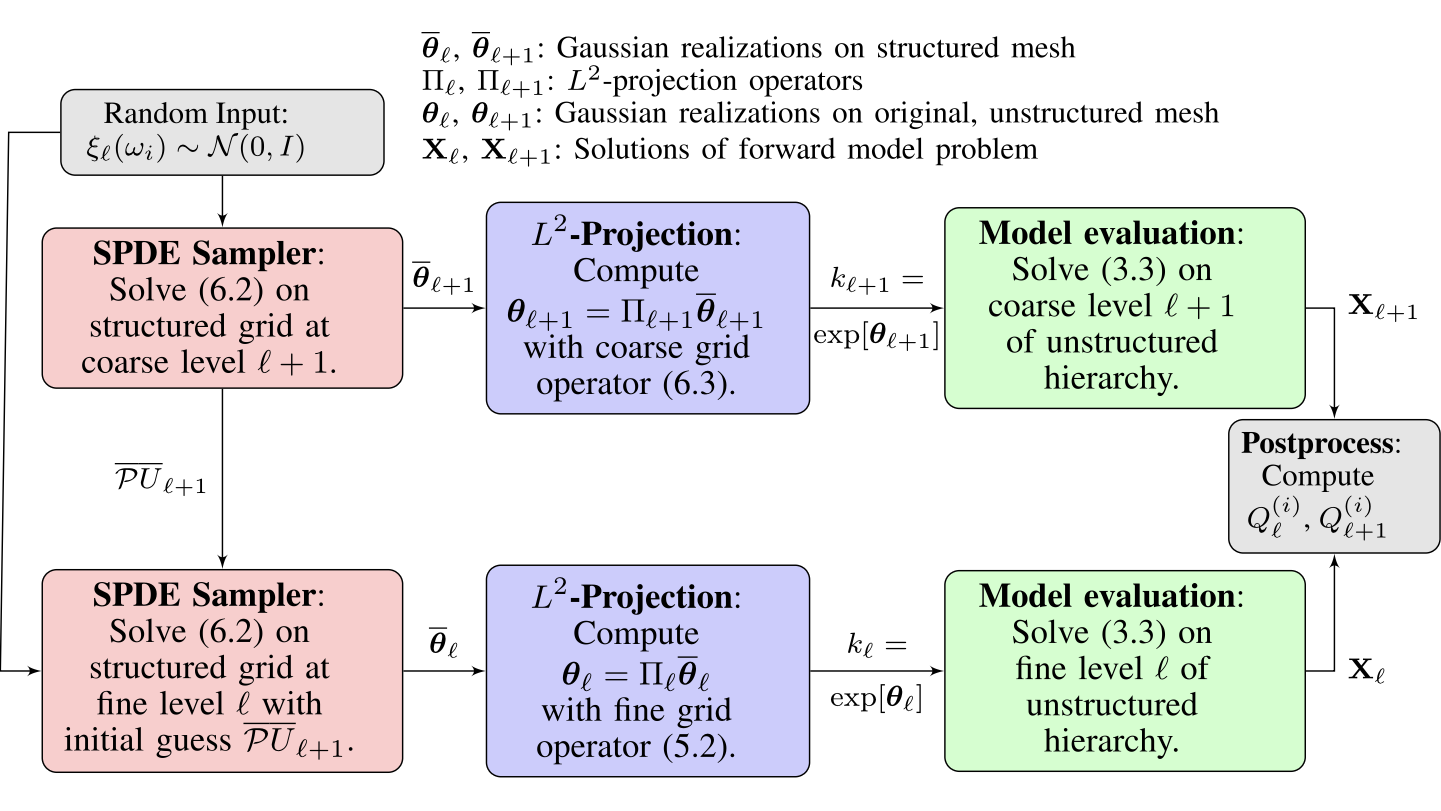
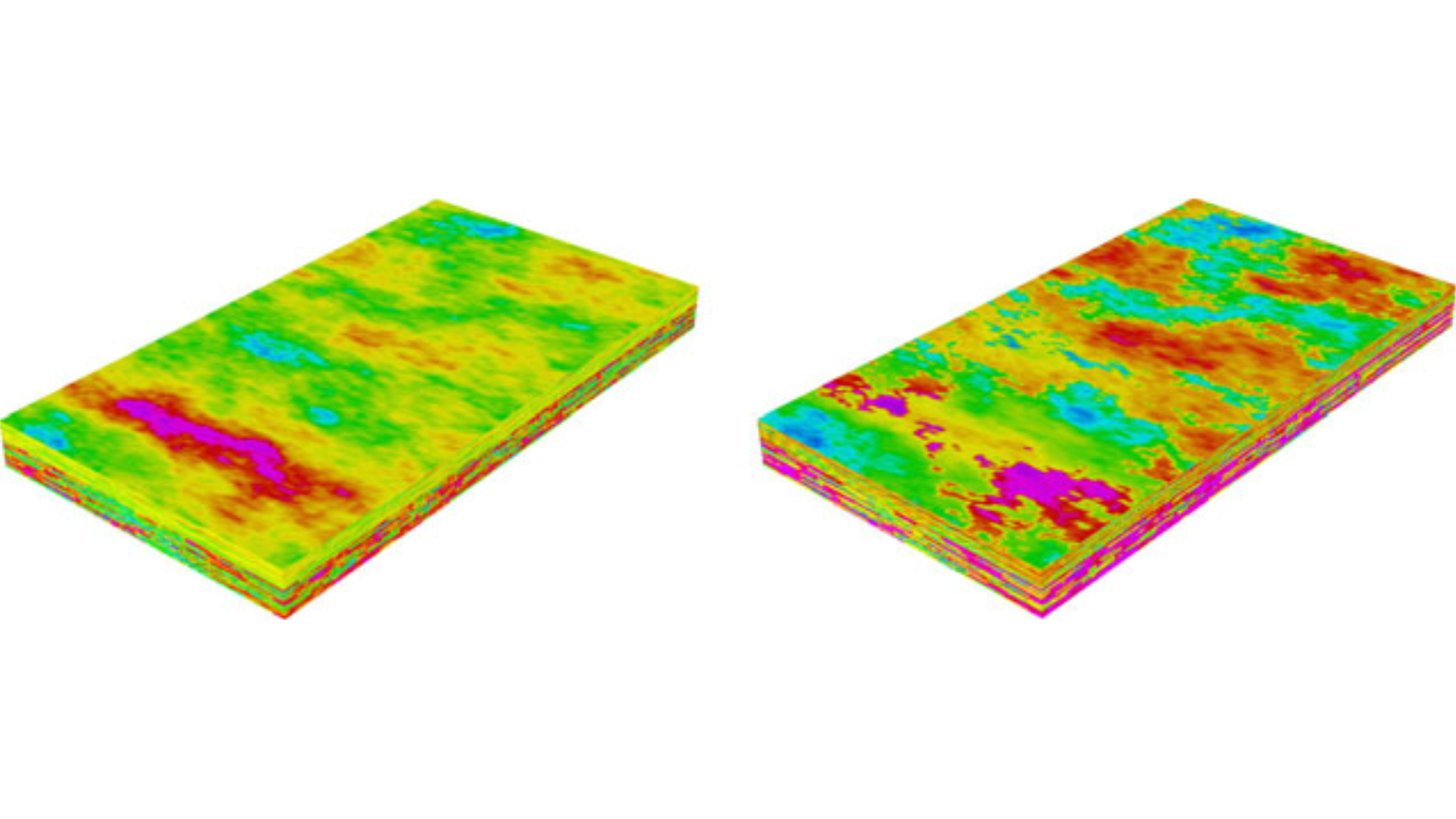
Applied geophysics research spanning subsurface flow, fracture mechanics, and uncertainty-aware reservoir modeling, highlighted by simulations of non-conforming fracture networks, large-scale phase-field fracture propagation, and jointing processes in sedimentary layers.

Uncertainty quantification

Description

Multilevel Monte Carlo methods for uncertainty quantification, hierarchical PDE samplers for generating spatially correlated random fields over general domains to assess model sensitivity and risk.

↑